Internal mobility
Hiring outside while the right person sits on your bench
By Yaseen Khatib, , 4 min read
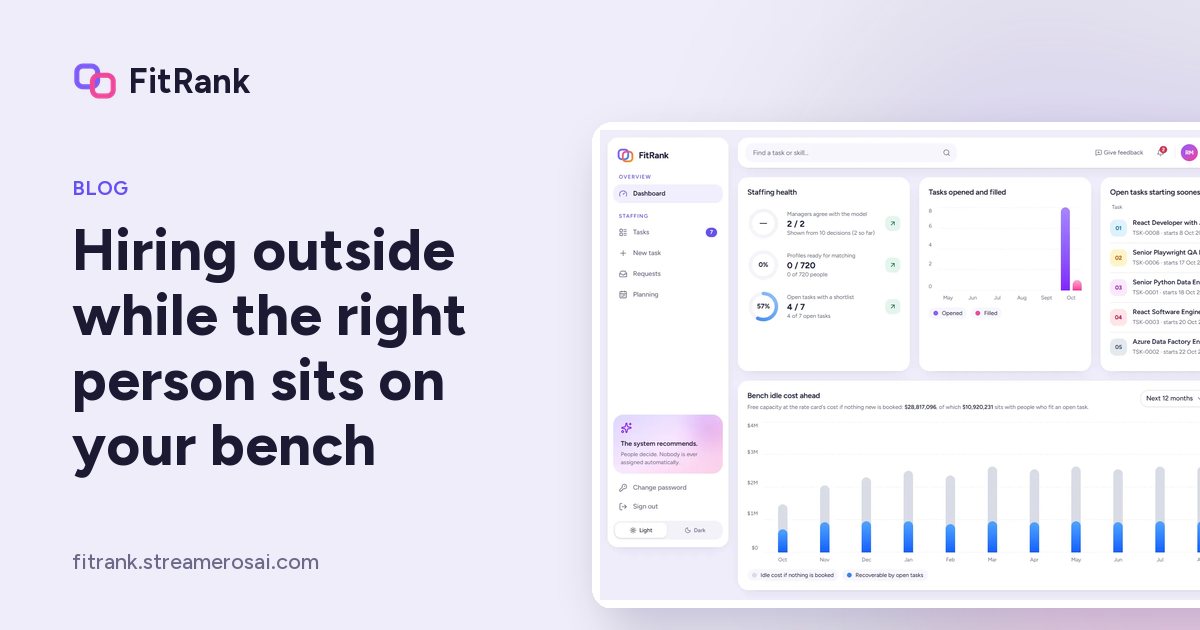
This one is painful to watch. A manager cannot find anyone for a role, asks HR to hire, HR posts on Naukri, screens 300 resumes, runs interviews for three weeks and finally makes an offer. The new joiner comes in with a 60-day notice period. Meanwhile someone with almost the same skills has been on the bench in another unit the whole time.
Nobody did anything wrong. The manager asked around and nobody mentioned that person. HR did what it was asked. The system just never checked inside first.
Why internal mobility is hard
- Visibility stops at the unit. Managers know their own people well and everyone else barely at all.
- People hold on to their own people. A manager who has a good engineer finishing a project would rather keep them for the next one than lend them out.
- Skill data is too thin to trust. If the HRMS says someone knows Java, does that mean last month or in 2019?
- The comparison is never side by side. Nobody puts the internal option and the cost and time of hiring outside next to each other before deciding.
Internal talent marketplace products try to fix this by letting employees apply for internal roles. That helps people who are actively looking, but most people on the bench are not browsing a portal. They are waiting to be told what is next.
Internal mobility meaning and rate formula
Internal mobility means filling roles by moving people already in the company: to another project, unit or role. A simple measure is the internal mobility rate = roles filled by internal moves ÷ all roles filled in the period × 100. If 12 of 40 roles this quarter went to people already in the company, the rate is 30%. Track it per unit as well; one unit holding on to its people can hide behind a good company average.
Build vs buy, for talent
There is also a middle option that gets skipped: the person inside is a near fit, missing one skill that could be trained in two or three weeks. Hiring takes longer than that, costs more, and the new person still needs onboarding. But this only works if somebody can see the near fit and the gap early enough.
Putting the two options side by side
The comparison that gets skipped is simple to write down. For one open role, fill in two columns, inside and outside, before anyone posts a job:
- Start date: the internal person's free date against the outside candidate's notice period plus the time to find them. A 60-day notice period starts only after the offer is accepted.
- Fit: must-have skills at the needed level, and how recently each was used. A near fit missing one skill goes in the inside column with the gap named.
- Cost and margin: the internal person's cost band against the expected offer, both priced against the rate the client pays.
- Ramp-up: someone who knows your tools, clients and delivery process starts useful sooner than a new joiner, who also needs onboarding.
- What happens to the bench: if the outside hire goes ahead, the internal person is still idle and still paid.
Neither column always wins. An outside hire can be right when nobody inside is close, or when the skill is needed for years. The mistake is deciding without looking at both.
How FitRank approaches it
In FitRank every task is matched against everyone inside first, across units. If a good internal fit exists, the manager sees them with reasons. If someone is close but missing a skill, that is shown too. Only when nobody inside fits does the manager send a hiring request to HR, with the task attached, so HR does not start from a blank page.
When HR uploads outside resumes, they are scored by the same rules as employees, and the manager marks each one fit or not. Every hand-off is tracked, so later you can see how many roles were filled from inside. Each open task also carries a hire-or-move card that compares the best internal person with the best outside candidate by fit, start date and margin, with the reasons for each side; the manager decides. More on the skill gaps and hire-or-move page.
More from the blog
Be one of the first teams to staff with FitRank
We're taking on a small number of pilot companies. Pre-register for early access, or talk to us about an annual licence.